Platelet Rich Plasma (PRP) Injections
What is PRP?
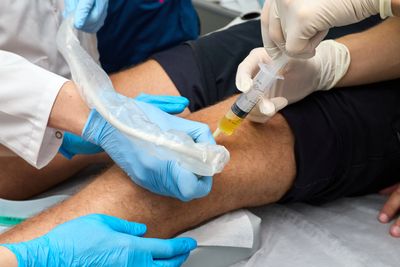
PRP stands for Platelet Rich Plasma. Platelets are found in your blood and help with clotting when you have an injury. They also contain special signals called growth factors that help with healing and regeneration. During a PRP injection, the doctor collects blood and spins it down to concentrate the platelets and growth factors. This super concentrated mixture is injected into tendons or joints to start a more natural and wholistic healing process.
What conditions can PRP treat?
- Joint pain (knee, shoulder, hip, ankle, SI joint)
- Tendon injuries (tennis elbow, Achilles tendonitis, rotator cuff, patellar tendinopathy)
- Ligament injuries (partial tears)
- Arthritis (best for mild to moderate)
- Meniscal injuries
- Sports Injuries
- Degenerative conditions
Dr. Lambeth will review your imaging, history and exam to determine how well your injury will respond to PRP.
How is PRP different from steroid?
Steroid injections temporarily reduce inflammation but typically only provide short term relief for chronic conditions. PRP stimulates healing and long term tendon and ligament support. Steroids can weaken cartilage in joints and reduce collagen if repeated over time. PRP reduces inflammations and promotes healing. It has also been shown to slow cartilage degeneration in early to moderate arthritis.
How is Dr. Lambeth's approach different?
- Specialized Care By a Physician: You will always be evaluated by Dr. Lambeth first. She will review your history, do an exam and review imaging. She may also order additional imaging based on your symptoms. Dr. Lambeth is double board certified and highly skilled in performing joint, tendon and spine injections.
- Platelet Dose Matters: Each PRP injection requires at least 60mL of blood to collect enough platelets to be effective. Current data suggests that you likely need 10 billion platelets in your PRP injection to maximize the treatment.
- Technique Matters: Each PRP injection will be performed using either ultrasound or x-ray guidance to ensure the platelets and growth factors are placed at the site of injury.
- Rehabilitation Protocol: PRP injections work best when combined with a a structured rehabilitation program to avoid re-injury or suboptimal results. Each patient leaves with a clear plan for rehab and expectations for improvement.
- Nutrition: PRP outcomes are strongly influenced by nutritional status. Optimal healing requires optimal protein, micronutrients and anti-inflammatory support. Dr. Lambeth provides recommendations for optimal nutrition and can provide referrals to a personalized dietician to optimize your results.
Contact Us
If you have any questions about PRP, please don't hesitate to reach out to us. A consult with Dr. Lambeth can be scheduled to discuss the therapy in more detail.